Waterloo Region Community Legal Services-led initiative aims to find solutions at grassroots level
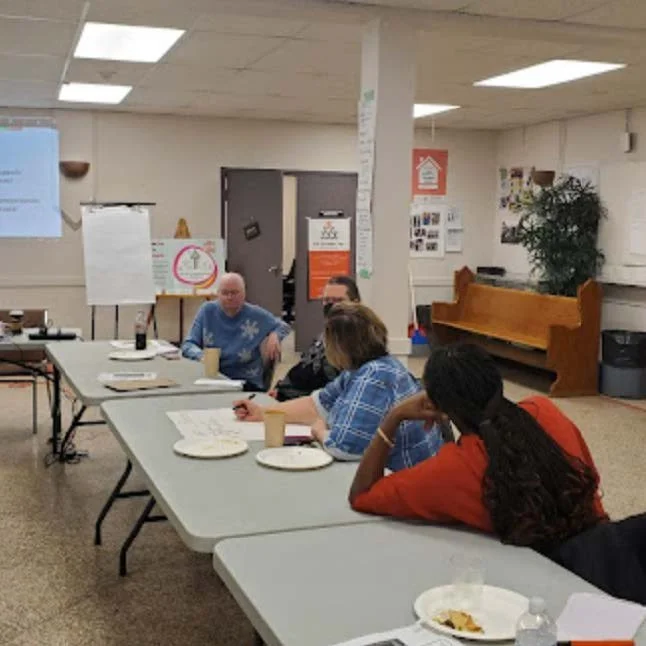
Solutions to poverty in Waterloo Region should start from the ground up, including input from those with lived experience.
Those beliefs are behind the genesis of Waterloo Region Community Legal Services’ Poverty Roundtable Community Study, which focused on finding immediate and long-term solutions to poverty.
Statistics show that there are more than 2,300 houseless community members in the region, and that number is likely an undercount. One in eight people is living below the poverty line as climate change and food insecurity have conspired to create what many experts believe is a polycrisis in Canada.
“Coming up with solutions or even identifying problems without the perspective of people who are experiencing it, you’re never going to be able to solve anything in a way that makes sense,” said Ashley Schuitema, Executive Director of Waterloo Region Community Legal Services (WRCLS), a non-profit organization that provides free legal information, advice and representation to those living in poverty in the region.
“To identify a solution that can work in practice, you need to incorporate the voices of people who have lived experience. That’s what we’re trying to do.”
Roundtable supported by WRCF
WRCLS, Community Justice Initiatives, and others who "organically came together" had been meeting ad hoc before the establishment of the Poverty Roundtable Community Study. WRCLS applied for funding through Waterloo Region Community Foundation (WRCF)’s Community Grants program, which is focused on the ways that meaningful social interactions strengthen the social infrastructure within and across Waterloo Region. The study was subsequently funded through a WRCF Fundholder – the Janice and Robert Deutschmann Family Fund, which advanced the initiative.
The financial support allowed WRCLS to hire a consultant to compile the Poverty Roundtable Waterloo Region Research Report, providing a framework and foundation to establish the poverty roundtable.
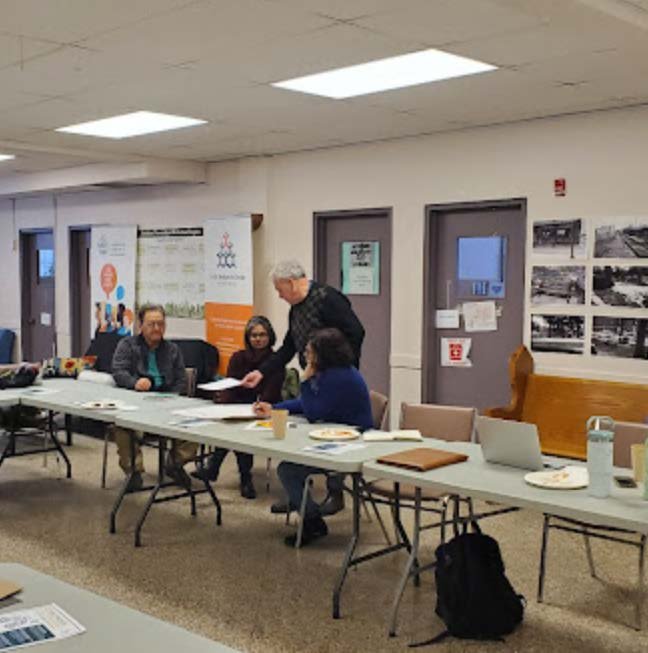
The consultant, Leah Connor, met with lived experts, service providers, grassroots organizers, and policy advocates. Also included in her work was a workshop, survey, asset mapping, and document review, which deepened understanding of the local advocacy landscape, clarified connections among groups, and identified urgent priorities and strategies moving forward.
Practical examples to inform the Waterloo Region approach were also gleaned from research into poverty-roundtable models from other communities.
In the study, among the many barriers that lived experts highlighted being faced with were affordable housing, Ontario Works and Ontario Disability Support Program rates, concerns related to rural and aging populations, access to free public transportation, accessibility, fair treatment of people who are Indigenous, racialized, and part of newcomer communities, and food insecurity. Through this initiative, Leah intentionally attracted, supported, and involved diverse populations.
Listening is a great start
Hearing and validating the perspectives from those with lived experiences is vital, but there is more to it than that, Leah said.
“It’s not enough to just have a perspective included in a report,” she said. “It’s actually really important to co-create with lived experience. We’re not there yet where we’re really co-creating with folks. But the poverty roundtable clearly has that value of bringing in lived expertise, considering co-creation, better understanding how policy affects people living with poverty, or food security, or precarious housing, all of these pieces.”
Without working in concert with those directly affected, “you’re spinning your wheels, you’re doing top-down approaches that are not resilient in this polycrisis,” Leah added.
Social infrastructure boosted
The roundtable's grassroots-driven approach contributed to strengthening the social infrastructure of Waterloo Region by fostering collaboration among diverse careholders, amplifying the leadership of lived experts, and mapping both formal and informal networks of poverty reduction.
“The great thing about the poverty roundtable is that it’s broad enough, and it’s grassroots enough that it could actually create a platform for everybody to come together in a way that’s impossible when you’re doing it under (big government),” Leah said.
Added Ashley: "One opportunity we have thanks to the work of the poverty roundtable is to take those poverty reduction strategies that are often top-down but bring it from the grassroots up. I think that that's really where we should be focusing our efforts.”
Monthly roundtable meetings continue while the group is considering funding to sustain and grow this work over the long term.
"We really need to consider other funding pockets or funding models, we need to have someone in a dedicated role to move things forward," Ashley said. “If we were able to have a fully funded poverty roundtable going forward, where we could value lived experience and expertise and could compensate lived experts for their role in that, Waterloo Region would be much better served."
To learn more about Waterloo Region Community Legal Services, go to wrcls.ca.
For more information about WRCF’s Community Grants, visit wrcf.ca/communitygrants. If you are interested in learning more about social infrastructure, visit wrcf.ca/socialinfrastructure.