
Whether helping folks grow their own food or stay active, these programs promote well-being
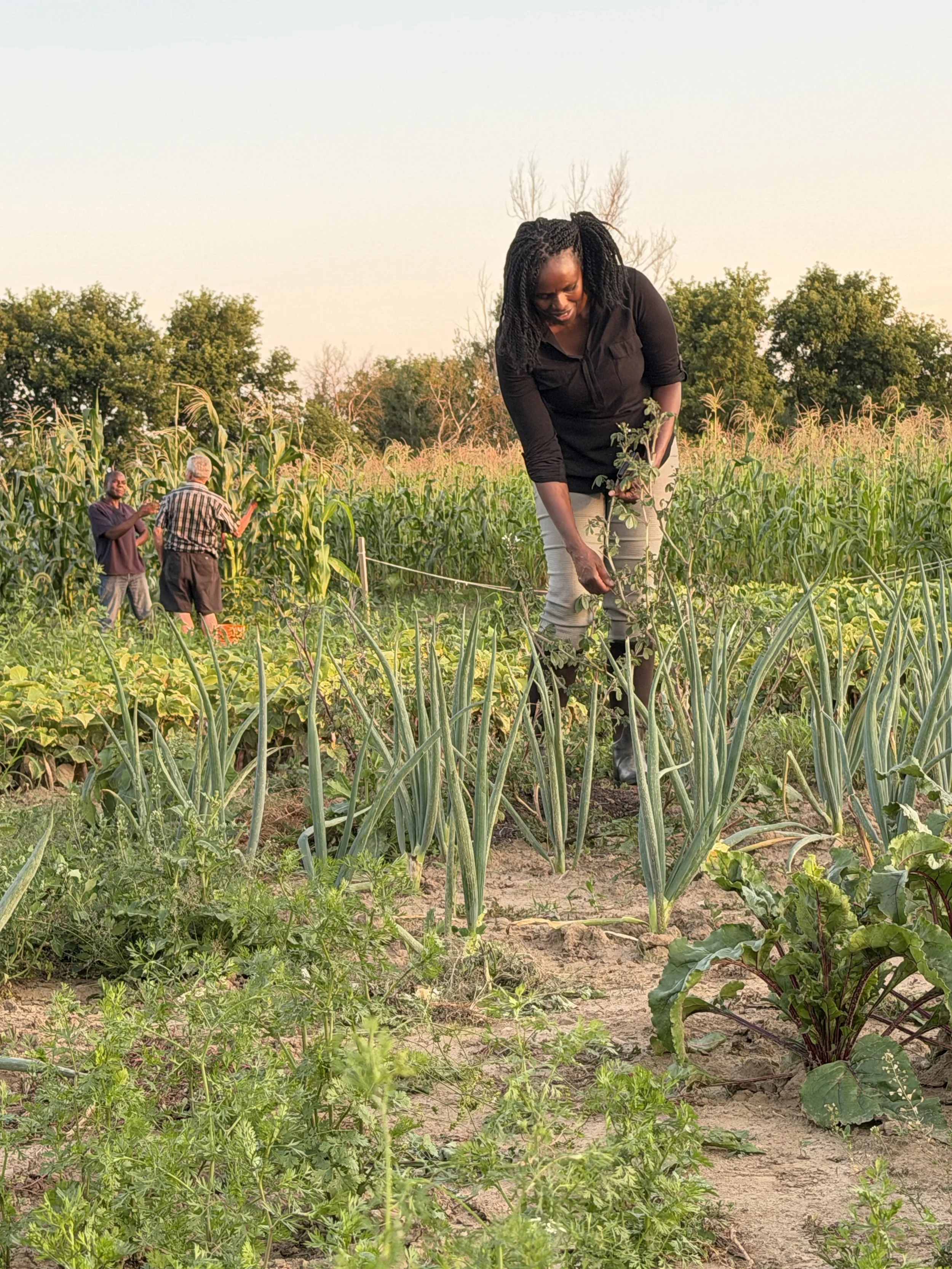
The Waterloo Region Community Garden Network's Petersburg Community Garden represents many things to many people.
For some, this land stands for hope. For others, healing.
It's a solution to food insecurity, a place for fellowship, where crops grow, and people beam with pride and purpose.
For everyone involved, it's a land of opportunity.
"For me, this is pretty much everything," said Gladys Rosana, who, along with her husband, Raymond, has been growing food for their family at the Wilmot Township garden for the past four years. "I cannot imagine being without this."
The 20-acre peri-urban garden, which is the largest community garden in Canada , is specifically for newcomers to Canada. It was established to create equity of opportunity to foster a sense of inclusion and a belief that individuals moving into the region can succeed here. Sixty families represent about 20 different nationalities in the field, with Swahili being the dominant language.
Gladys and her family arrived in Waterloo Region from an area in Kenya where farming and growing their own food was commonplace. The garden network allows that way of life to continue here; her family grows about 90% of the food for their household, including culturally appropriate food such as white corn and amaranth.
"It's kind of mirroring how I grew up," Gladys said while tending to her garden one recent summer evening. "We don't get homesick because we have the (same) food. Now that we are able to grow what we grew up eating... we are home."
Hand-up model
The Petersburg garden is one of more than 100 in the regional network. It leverages a hand-up model. Individuals are viewed not as dependents but as business partners looking to improve their lives.
The land is being rented long-term. Individuals purchase plots, which are theirs to do with as they wish. (Gladys and Raymond rent a half-acre plot and share an additional quarter-acre plot with friends.)
The nonprofit garden network receives infrastructure support from the Region of Waterloo Community Environment Fund and the Region of Waterloo Upstream Fund (the Equity, Diversity and Inclusion Fund) to provide gardeners with a good water supply, a water pump, a C-can for storage of tools and materials, and other resources needed. Most importantly, newcomers gain access to land.
"This is equity through opportunity. That's what we're doing here," said Waterloo Region Community Garden Network Board Chair, Doug Jones.
Food insecurity and climate change are never far from the conversation. Many gardeners within the network practice seed-saving — harvesting, drying, and storing seeds from mature plants to replant them in future growing seasons. Composting is supplied by the region and comes from the yard waste stream.
Growing community
There are many byproducts of the Petersburg garden, not the least of which is social infrastructure — the shared places, experiences and resources that enable people to connect in meaningful ways. Like carrots, peas, and lettuce in the field, that infrastructure is abundant here.
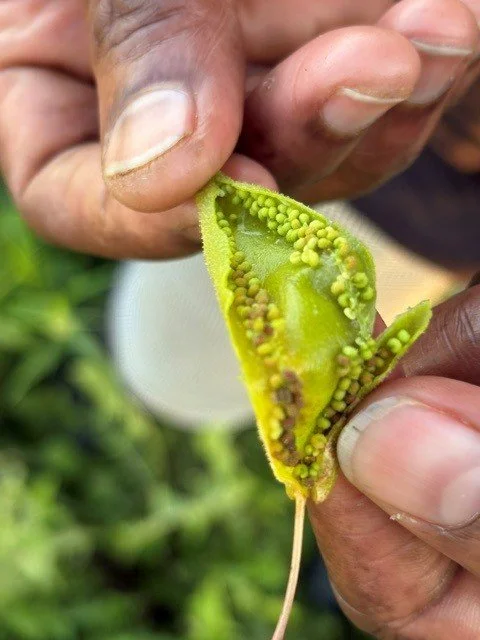
African Spider Plant Seeds
"Food, recreation, community, networking, everything, it comes together. It's a community," said Gladys, noting that the gardeners frequently find themselves bursting with laughter and breaking into song together.
For many, the garden also serves as a critical place for refuge.
"People are here dealing with so many things, including survivor guilt," Doug said. "Folks share what is happening in their lives. Stories like: 'My family is in the Congo right now, at risk of dying. My family is in northern Nigeria. My husband just got abducted, and I don't know if I'm going to see him again.' But this is where I can come, I can feel safe. I can feel whole here, because this is familiar to me.” Doug added, “Those things can make you cry if you think about it for a moment."
Gladys isn't sure what her life in Canada would be like if the Petersburg garden didn't exist.
"Maybe I would be okay, because I would assume that's how life is," she said. "But now that I've experienced this, I cannot imagine being without this."
Added Doug: "We want people to experience hope, because we're not finished; we have things to do, we're asking for more land. We think that it's critically important to be able to meet the needs of a newcomer community, so there's that sense of belonging that Gladys is describing.
"This is the model that should go across Canada," he added, "in terms of tapping the untapped resource of newcomers here, who know how to grow food, but they're underemployed for reasons of language, interest, not having their degrees recognized, maybe even some health concern, but a deep desire to be on the land, and in the community."
Activity matters
The importance of shared spaces and connection through nature within the Black community extends beyond the garden.
Waterloo Region-based Afropolitan Canada exists with the understanding that activities are empowering to the roughly 500 Black, Indigenous, and racialized families it serves in the region through a lens of "equity, justice, and progress."
The bilingual nonprofit organization seeks to empower via core pillars that include entrepreneurship, life skills, mental health, and education.
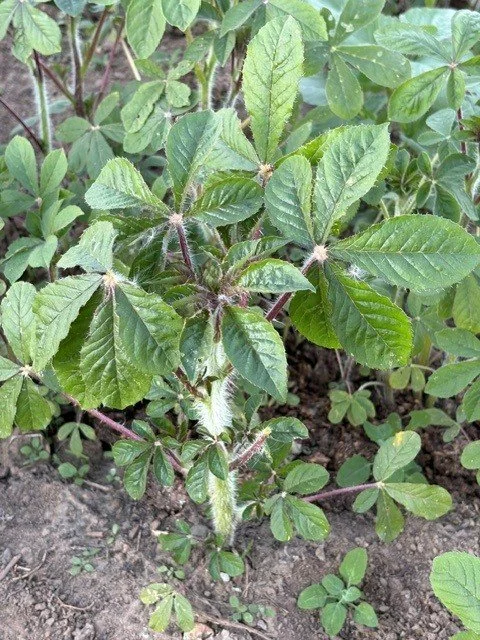
African Nightshade
Among its life skills and sports offerings are soccer and tennis programs, a Roots & Rivers program that delivers hiking, fishing, and camping experiences, and its most popular swimming program, Swim to Survive.
The free eight-week swimming program for Black and racialized individuals and families teaches life-saving water safety skills and confidence while providing access to aquatic spaces to those faced with various challenging circumstances and barriers.
"We do get a lot of newcomer families. They don't always have that network immediately. But what is beautiful with swimming is that they do build those communities right there," said Kelly De Fogain, Founder and Executive Director of Afropolitan Canada.
Kelly said that while swimming is second nature for many people born in Canada, that's not the case for many newcomers. Her own experience of learning to swim while growing up in Cameroon involved her uncle plopping her off a boat and into the water and leaving her to figure it out.
"I almost drowned twice," she said. "When I came here to Canada, and we had school activities, I couldn't participate in anything that involved water. There was shame that came with that."
Place of comfort
Having a shared space to learn to swim within the Black and racialized community allows for a sense of comfort and togetherness that might not be found elsewhere.
"There's a desire from families in general to get their kids into swimming so that they can learn how to swim. They want it to be done in a community... they want to be around other people who just look like them," Kelly said. "When you're learning a new skill, sometimes you can feel a little bit of shame if you are in a pool and you see another family who's just thriving, and you're just trying to learn how to tread water. When you know that you're in the same space with other people who really do not have the skill set, then you become comfortable."
Connections are made naturally through the program, which is offered at three pools in Kitchener and another in Cambridge.
Kelly said demand for the program far exceeds current supply, and the eventual aim is to offer it year-round.
Funding is a barrier to those aspirations, however.
"My role is to inform the decision-makers that what can be super easy for second- or third-generation Canadians here might not be the same for this newcomer or someone who has that historical background of exclusion from outdoor recreation and swimming," Kelly said.
'Right path for success'
Afropolitan Canada's nature-based programming is succeeding, she said, evidenced by the fact that the organization is mirroring standards and regulations set up by provincial and national entities.
"We're on the right path for success because we are the leading organization in this region, if not in the province, when it comes to swimming for Black, Indigenous and racialized communities," Kelly said. "Every year, we see the numbers climbing, and we also see our programs getting better because we do work with partners who have created those curricula. We are making sure that our programs are following the standards of each entity, whether it's swimming, fishing, or tennis. Because we're doing it that way, it's giving us a certain credibility."
Kelly said the best version of her organization would consist of a permanent team. There would be access to every resource required, including transportation for all. Every detail preventing someone from participating would be covered.
Because at the heart of it all is equity and opportunity.
'Build villages'
"As much as our name is really Afro... it's politan, so cosmopolitan, as well," Kelly said. "We really are making sure that, yes, primarily we're serving Black newcomers, but we want to make sure that other communities are coming in. We're intentional about making sure that we can live in harmony; we can see how similar we are.
"Really making sure that we're creating those spaces for folks to connect and build villages."
For more information on Afropolitan Canada, visit afropolitan.ca.
To learn more about the Waterloo Region Community Garden Network, go to wrcgardennetwork.ca.
For more information on Waterloo Region Community Foundation’s Vital Ideas Report about Social Infrastructure and Black Communities, go to wrcf.ca/vital-signs.