
Local artists team up to revive landmark with help from village BIA and WRCF
Local artist Kae Drawehn swooped in to rescue a mural project in St. Jacobs some three decades ago, so it’s perhaps only fitting that others recently acted just as quickly to ensure her legacy endures.
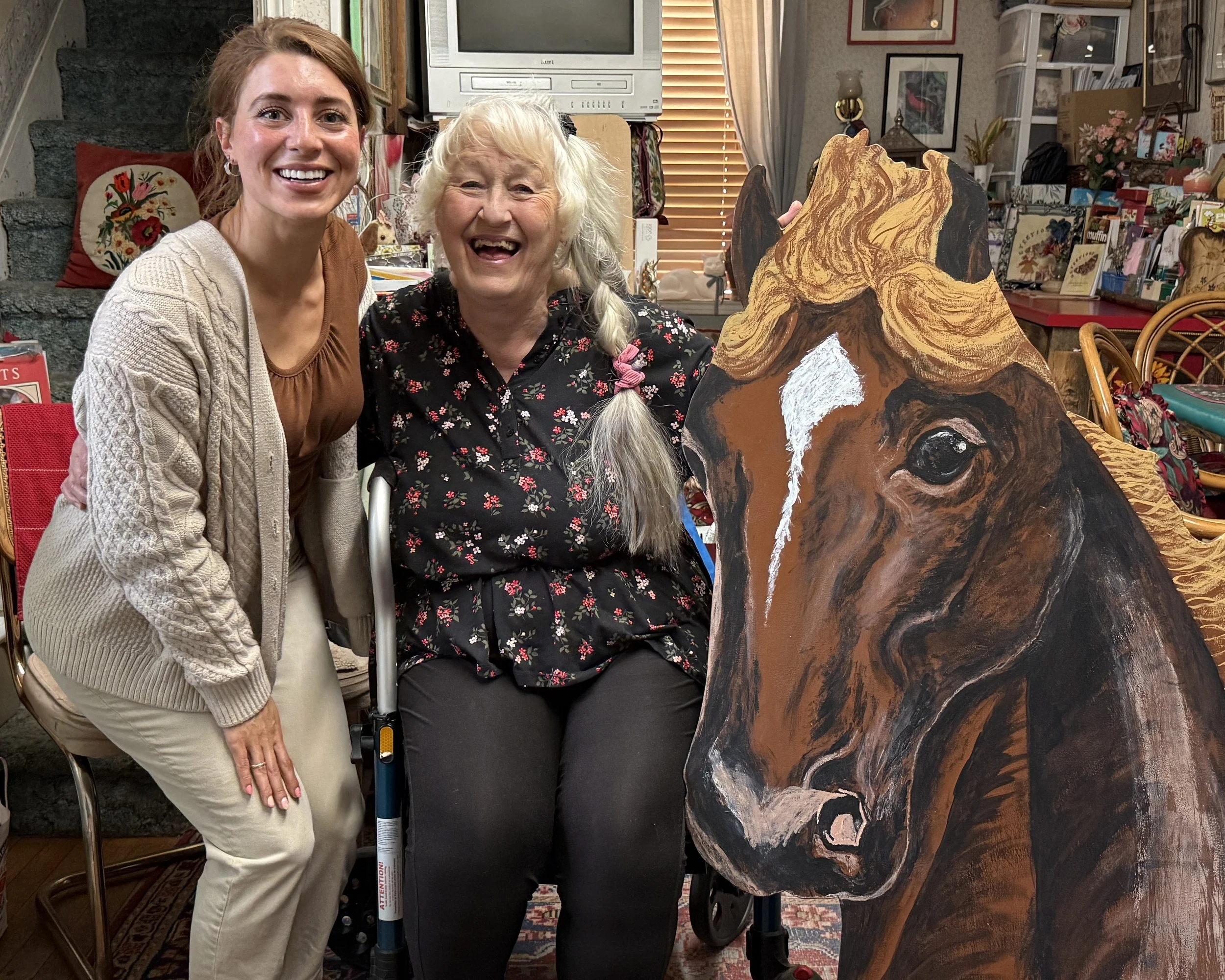
Keisha Thomas and Kae Drawehn
Regular visitors will recognize the large mural at Spring Street in central St. Jacobs. It shows a Mennonite schoolteacher riding home in her horse-and-buggy, passing four truant boys fishing. Kae’s pet, 'Jubie,' appears alongside local wildlife and butterflies — her favourite subject to paint.
While it has become the village’s most famous mural — folks regularly photograph the artwork and share it on social media — Kae’s involvement was happenstance.
Originally, the store owner had contracted out the mural project to other artists, but the agreement with them fell through. That’s when Kae offered to take over. Up to that point, Kae, who moved to St. Jacobs from Waterloo in the 1990s, worked primarily as a portrait artist. She taught herself each step of the way on the mural project, ultimately creating an evocative piece that represents and showcases the village and the township’s Mennonite heritage, identity, and connection with nature.
Wear and tear — and help on the way
The outdoor mural had recently begun to show its age and required restoration.
In 2024, Kae’s granddaughter, Leah, connected with The Village of St. Jacobs Business Improvement Association to share her grandmother’s wish to see the mural restored to its original beauty. That set in motion a restoration project that included the original artist as well as an emerging young local artist, while leaning into the village’s community spirit and connectivity.
St. Jacobs resident Keisha Thomas, of KT Painting, repaired the peeling paint and restored the original colours, while St. Jacobs business, Artefacts Salvage & Design, supplied the wood elements. Kae, who is now in her 80s, was unable to work on site due to mobility issues; however, she painted new wood cutouts — shaped as key elements of the mural, including the horse, dog, flowers, butterfly, and more — which were integrated into the restored mural.
"Seeing her life’s work revived and restored to its original beauty was incredibly powerful,” said Amanda Palmer, General Manager of The Village of St. Jacobs BIA.
“This restoration project has already allowed a new generation to know the original intent of the artwork and the legacy of its artist, both recently rediscovered.”
Restoration of the village landmark was made possible through Waterloo Region Community Foundation (WRCF)’s Arts Grants program, which supports initiatives focused on improving social infrastructure in Waterloo Region. The BIA was subsequently funded through three funds: Keith and Winifred Shantz Fund for the Arts; The Hilde English Memorial Fund; and The Motz Family Endowment.
Kae appeared in the right place at the right time decades ago, and the timing of this funding availability was similarly serendipitous, Amanda said.
“As a result of the funding, we were able to fully restore the horse and buggy mural to a level that honours its original craftsmanship and cultural significance,” she said. “The support allowed us to bring together an incredible team. The original artist, Kae Drawehn, who contributed to the restoration from her home, our mural restoration artist, Keisha Thomas, who masterfully brought life back to each blade and flower, and Artefacts Salvage & Design owner Chris Blott, who expertly cut out the pieces for Kae to paint from home.”
“Despite Kae’s mobility challenges, she remained an important part of the process, and it became a meaningful, collaborative effort where everyone supported one another to see the mural brought back to life,” Amanda added.
The mural serves as a meaningful connection to the area’s past, and this project has helped to preserve community history and strengthen a shared space within Woolwich Township through civic participation.
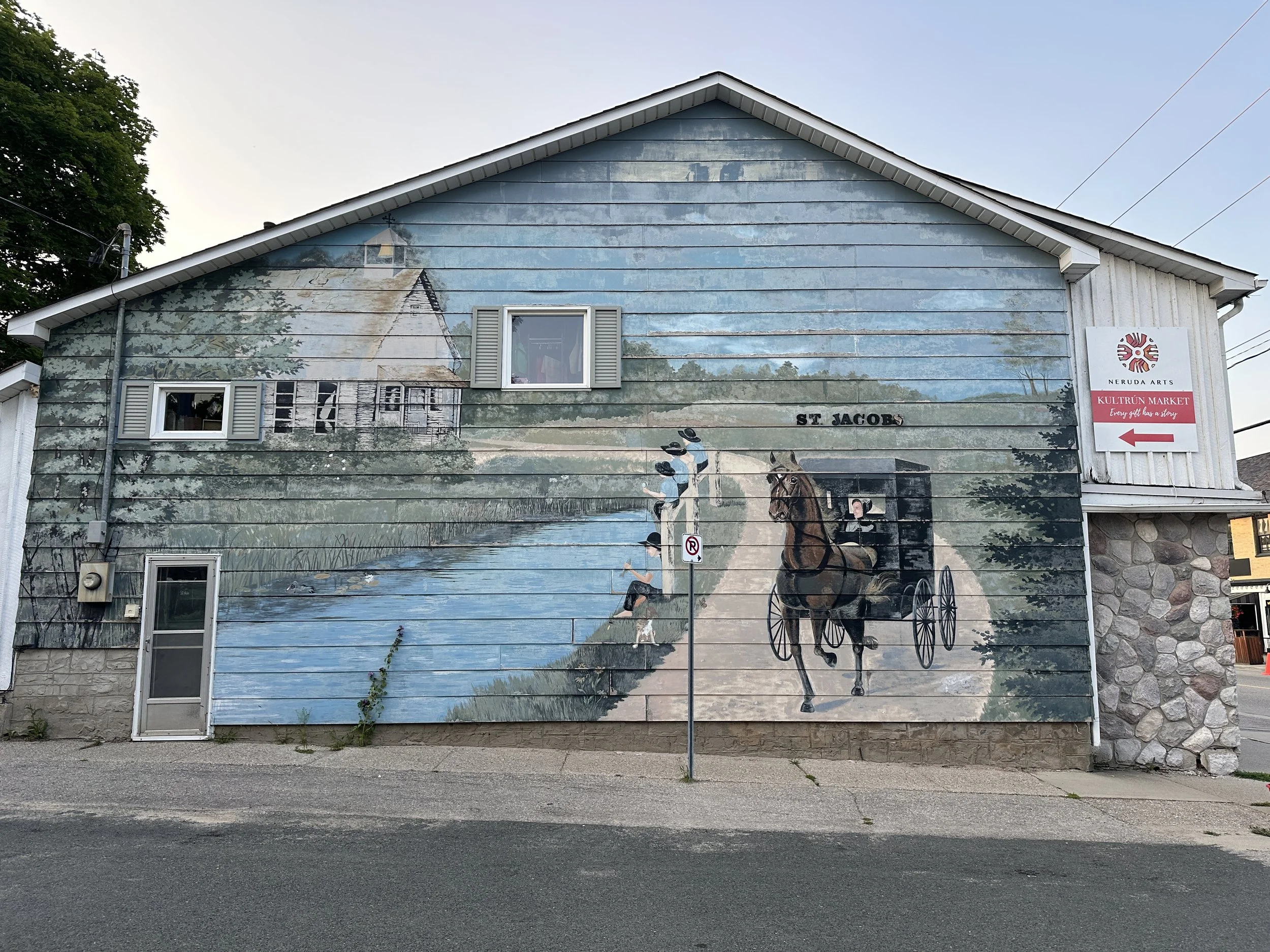
Mural before restoration.
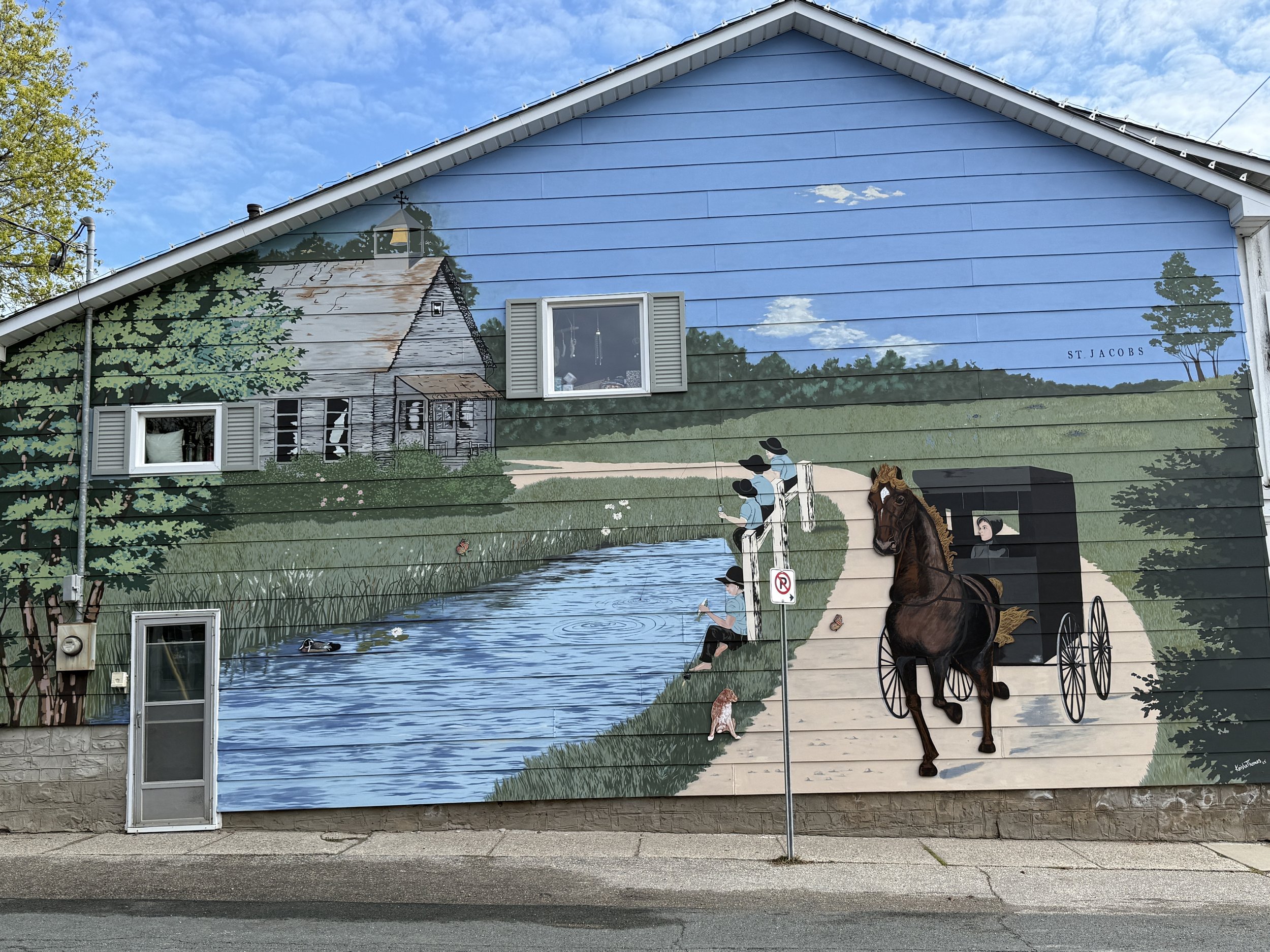
Mural after restoration.
Amanda said the project also “demonstrated how cultural initiatives can be inclusive, supporting older adults and those with physical limitations, while giving residents and visitors the chance to connect, enjoy, and learn from a playful, respectful story of rural life and Mennonite heritage.”
To learn more about The Village of St. Jacobs BIA, go to stjacobsvillage.com.
For more information on WRCF’s Arts Grants, visit wrcf.ca/artsgrants. If you are interested in learning more about social infrastructure, visit wrcf.ca/socialinfrastructure.