
'Driven by the people’: Kitchener Market fosters community
Downtown mainstay plays key role in connecting strangers and friends
The Kitchener Market’s benefits are as diverse as the produce, meats, baked goods, and specialty items up for grabs.
It’s an informal space that fosters community. A Saturday morning ritual. A place for strangers and friends to congregate.
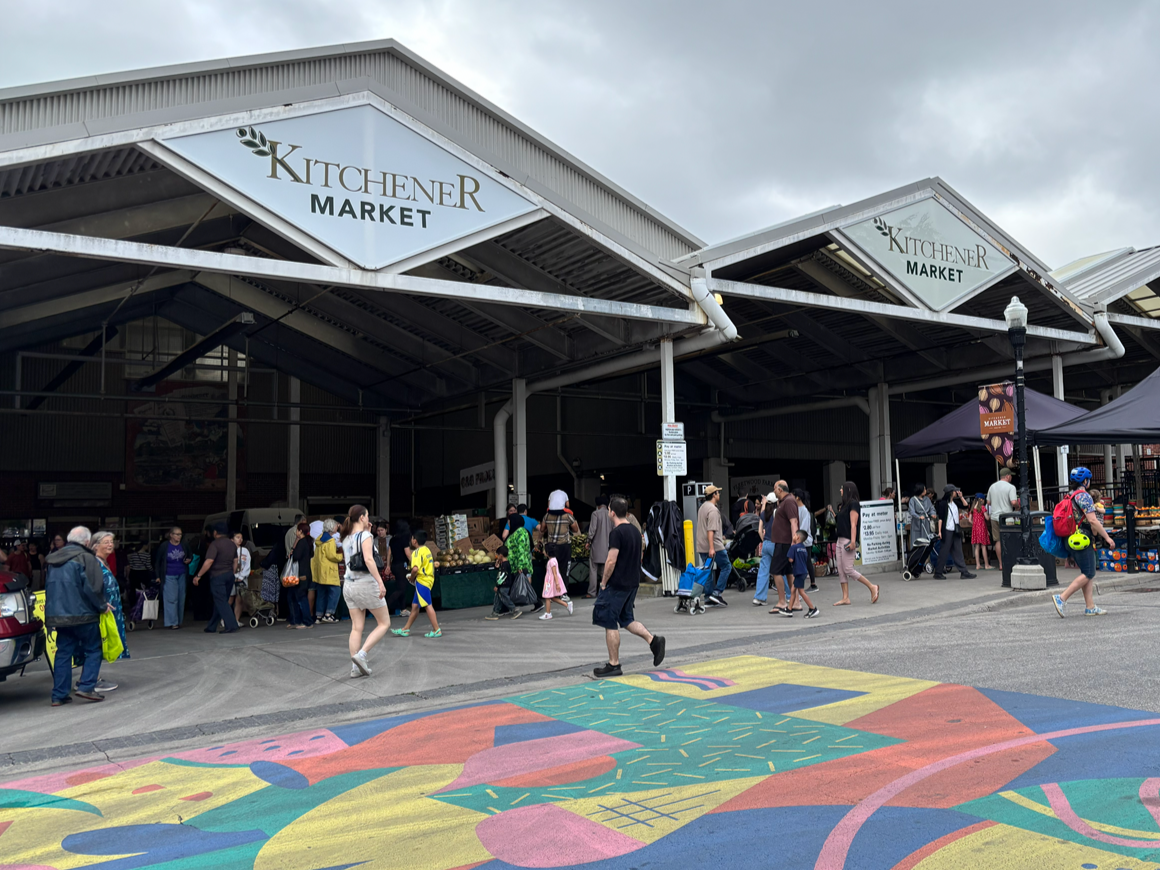
For generations of families and similarly those just getting started, within the storied walls is an opportunity to earn a living.
The market has been many things to many people for more than 150 years, but its central purpose has always been connection.
“I would say the biggest thing that you will see in and around the market on any given Saturday is that connection,” said Cameron Dale, Manager at the Kitchener Market. “It's the thousands of conversations that are happening, many of which are those brief conversations with people who you might only see once a week, or with the businesses you shop at, which nonetheless are a really important part of building a city where you feel like you're connected.”
One of Canada’s oldest
The Kitchener Farmers’ Market is one of the oldest operating markets in Canada. Located on King Street between Cedar and Eby Streets, the market serves as an entrance to downtown Kitchener and a cornerstone of the community.
The origins of the market can be traced to the first Mennonite settlers in Waterloo Region in the 1830s. Area farmers with an excess of crops held outdoor markets in the Village of Berlin (now Kitchener).
While there have been ebbs and flows along the way, the market has forever functioned as a community hub, bringing together local producers, residents, and businesses in a shared, social space.
The market’s community-building value is tremendous as Waterloo Region aims to keep pace with investment in social infrastructure — the shared places, experiences, and resources that enable people to connect in meaningful ways.
As the region’s population continues to grow, social infrastructure is critical to ensuring our communities are equitable, connected, sustainable, and that people are thriving.
The Kitchener Market provides an opportunity for all of the above. It brings folks together through the popular Saturday Farmers’ Market, the summertime Music at the Market series, year-round programming that includes cooking classes, the popular Kids in the Kitchen Summer Camp, the Far East Asian Night Market, a weekly Food Hall featuring enticing options from around the world, and much more.
Third space with economic benefits
The market is viewed by many as a third space in the community — a social environment separate from home and work where people gather, socialize, and connect with their community.
“It’s one thing to have social spaces and third spaces,” Cameron said. “(But) I think it's important to demonstrate that you can build spaces that satisfy the goal that people are seeking from third spaces, while also really having an oversized economic impact.”
“A lot of other third spaces you might think of... the community connection piece is intentional. I would say one of the nice things about the market is, we’re intentionally trying to build a space where connections can happen, but at the same time, it should feel natural; it should feel like it’s just part of your process of being there.”
Serving as an intersection of community, culture, and commerce, Cameron highlighted that spending locally goes further than many realize. One study suggests that every dollar spent at a farmer’s market in Ontario sees $1.38 returned locally in economic impact.
"The ability that markets have to drive social value and an equally impactful economic value is something that's maybe not always recognized, and it's something that we always want a champion,” Cameron said. “When you're spending your dollars with the businesses at a place like ours, you're investing that dollar back heavily into your own community.”
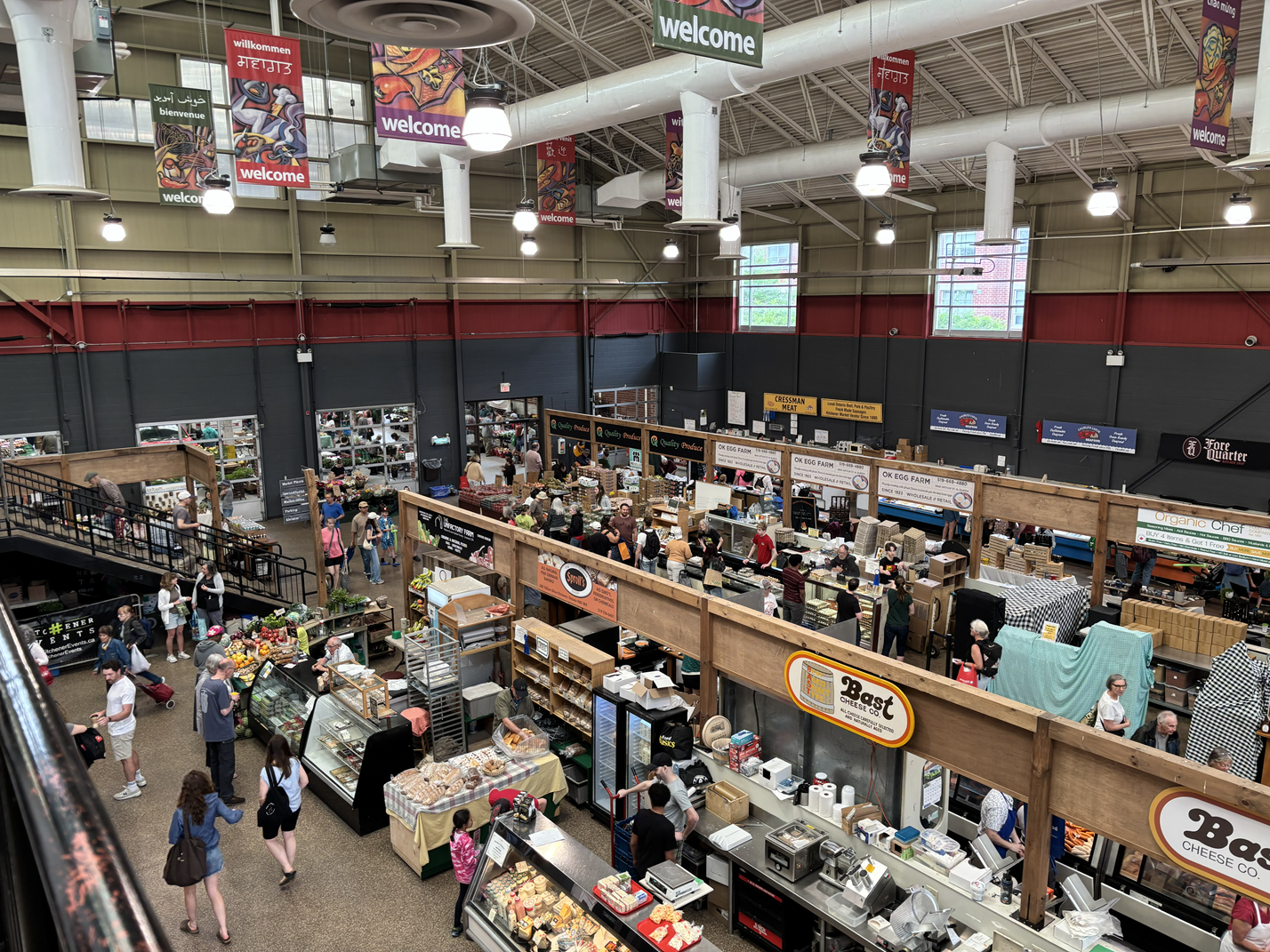
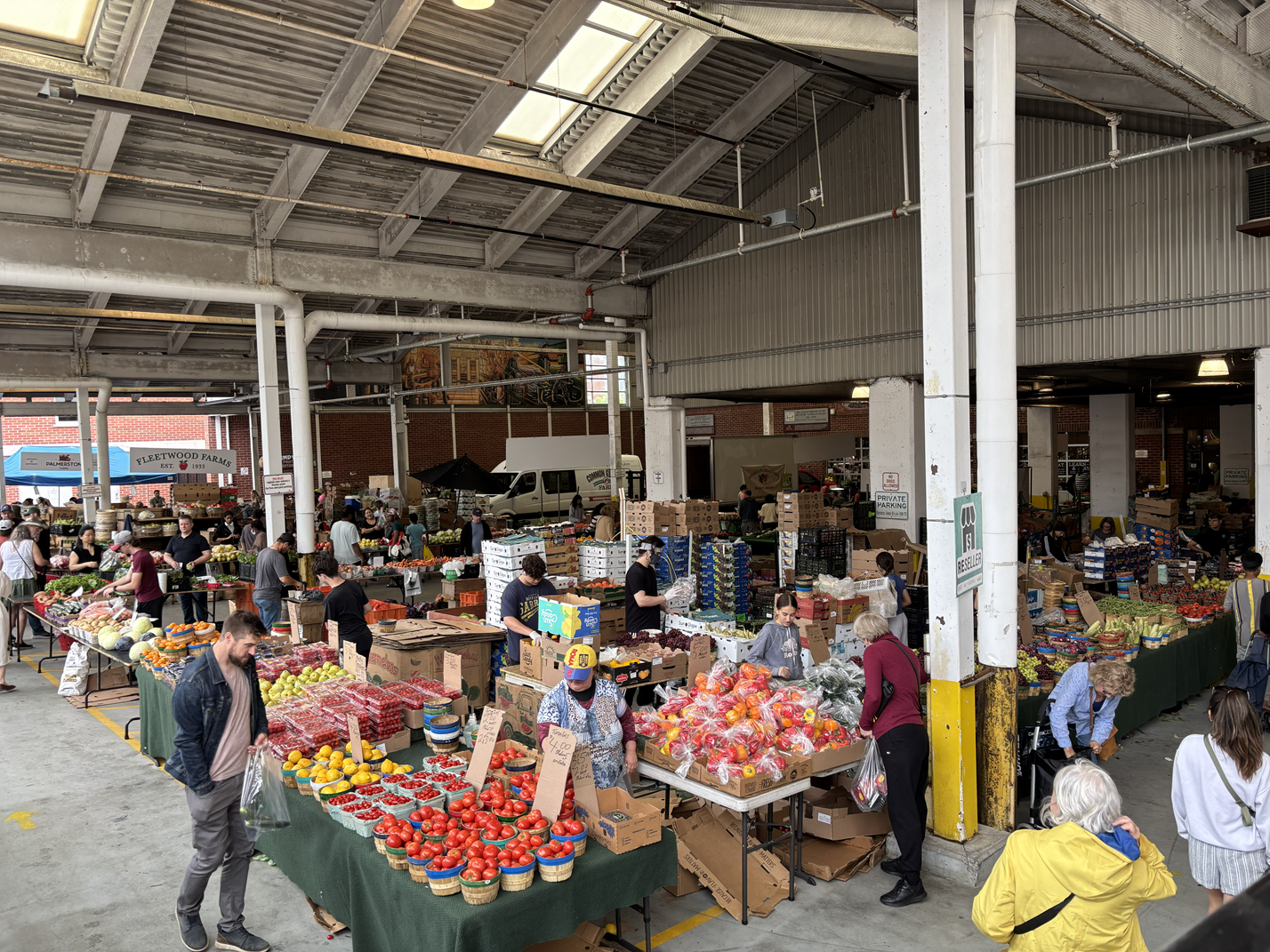
A typical day at the market can ignite the senses; sights and sounds are as varied as the seasonal fruits and vegetables on offer. From Tuesday to Friday between 8 a.m. and 3 p.m., permanent food vendors serve global cuisine, while the popular year-round indoor farmers’ market is a Saturday mainstay, that sees between 6,000 to 10,000 residents each week.
New experiences always around the corner
No day is ever the same — for the operator, the vendors, or those visiting. The market brings a certain irreplaceable energy and spontaneity.
"Something I love about public markets — and I think is something that you see a lot of public markets that you maybe don't see elsewhere — it's this idea of what we would call the accidental audience. This idea of it's one thing to go to a museum because you want to see what's in that museum. You go to a gallery because you want to see what's in that gallery. But there are also a lot of people who maybe don't have the time, inclination, or resources for whatever reason, to go to a destination on a Saturday.
“But by the same token, what we're able to do, whether it's with our buskers, artists, whether it's murals, vendors with fantastic products... I think public markets often represent this great opportunity to walk in, not know what you're looking for, but still have a fantastic experience. It might be an experience that you weren't expecting and wouldn't have exposed yourself to otherwise. But you can come away from it, and you've had your day enriched by that. And I find that's a special thing that you get from spaces like markets.”
The market is also viewed by many as a safe starting location for newcomer businesses. In addition to helping these newcomers become part of the community, the economic impact is great. In some cases, this starting location serves as a springboard for an additional business or location.
“We see loads of entrepreneurs and businesses. They're amazing at what they do, which is making the thing they make, but they might not be skilled at some of the business side requirements, or they might not be able to secure a lease somewhere,” Cameron said. “And what we really want to be able to do is build an environment where, as long as have a solid ability to run the core of what you do, we can try and handle some of the rest.
“At the market, we support with marketing, we support with facility management, so that you can focus on the thing that makes your business brilliant.”
‘Really lucky’
The Kitchener Market could be viewed as a refreshing model in an era of corporate giants.
"We're really lucky to have a piece of civic infrastructure like this because many, many Ontario cities had them. Not all of them have retained them,” Cameron said.
“There's a big difference, I think, between walking around the grocery store in relative silence, paying at the end and disappearing, and being able to speak and make connections with all those people you're buying from at the market,” he added. “Don't get me wrong, the supermarkets are a really valuable part of our society, and there are many in Kitchener that employ Kitchener residents. The market just allows for a different type of community engagement.
“For a great number of newcomers, they're often moving from places around the world where shopping at markets is a much more common way to shop. In some ways, I think that's a really wonderful way that we're able to connect a shared experience from Kitchener residents who maybe shopped at the market for three or four generations, and Kitchener residents who may have arrived very recently in a shared experience of having a market day, beyond just coming back with what you need to fuel you for the week.”
The sense of pride shared by those involved with the market has never been in doubt.
“We've all got something in common when we're in the space on a Saturday, which tends to be building and participating in a successful market. And that common goal amongst a group of folks who, during the week might have different goals and/or different opinions, brings people together” Cameron said.
“Although you may be only having that touchpoint once a week, over the course of years and those little conversations and those touchpoints, you are able to build really meaningful relationships or relationships that at points become meaningful, and I think you're only able to do that in, in offline places like the market.
“They're not a homogeneous group. The fact that you're all able to come together and do that and play your role in that history of being a space that has supported so many generations of folks as they've built their lives at the market, I think that's special.
“There's a huge amount of pride in our vendor group, not just in the businesses they've built, but I think pride in the market they've built, too, and the role it plays in the community.
“It’s driven by the people in the space, and that's a really lovely thing.”
For more information on the Kitchener Market, visit kitchenermarket.ca.
To learn more about Waterloo Region Community Foundation’s Vital Ideas Report on Social Infrastructure and Places, go to wrcf.ca/vital-signs.