Community by Design Episode 3 - I Can Tell That We Are Going to Be Friends: Schools as Havens
Community By Design is a podcast series, with host Jay Harrison, that takes a deeper look at how social infrastructure, our shared spaces, services, and community connections, shape daily life across our region. Listen more at https://communitybydesign.transistor.fm
“Almost everybody I know is from my school.” -- Anonymous student
Waterloo Region’s public education system is diverse, with two English-language school boards and one French-language board, which combined, serve nearly 100,000 students across the region.
This episode explores the essential role schools play in our social infrastructure, highlighting how students, parents, and teachers use school spaces to create welcoming, supportive environments for community members. Schools are more than places where learning happens—they’re touchpoints where young people and families create havens of belonging, built one story, one connection, and one act of care at a time.
“When I was in school it was a big deal to have community members come into the school. It was a big deal to have your parents come and read stories, or to have community members [teach us things]… we were learning community.” -- Laura Mae Lindo, Assistant Professor of Philosophy and Director of Black Studies at the University of Waterloo
The concept of social infrastructure is not new in our schools, but naming it and making it tangible offers the opportunity to shape it. Here are two examples of ways students and parents are using schools to foster connection, mutual aid, and meaningful support:
Students are shaping the spaces and supports they need in order to thrive. The local Gender Sexually Alliance at Waterloo Collegiate Institute is a student-led school group that offers community and safety for 2SLGBTQIA+ students and their allies.
“We have an amazing connection to each other, with community, and we always support each other when something happens. It’s just a really nice space where we can all get together and support each other. Queer students can be members, allies can be members. Anyone.” -- Quinn Palmer, Student leader in the GSA at Waterloo Collegiate InstituteWorking to remove cultural and linguistic barriers for newcomer families. After learning that there were 22 languages at their school, a group of parents at King Edward Public School helped create a program to offer language support to families who needed help navigating and connecting with the school.
“We started thinking there’s got to be some way here to both celebrate this incredible diversity, but also come up with some way of supporting folks who are new to Canada and/or unfamiliar with the school system, and who perhaps don’t have English as their first language… that’s where this idea was born.” -- Taarini Chopra, Parent at King Edward Public School
What works for one community may not work for another. The key is to be intentional.
“There’s no cookie-cutter method to build social infrastructure or to be engaged in social infrastructure in a meaningful way. The goal is to pay attention to what’s happening in your community and to build accordingly.” -- Laura Mae Lindo, Assistant Professor of Philosophy and Director of Black Studies at the University of Waterloo
CREDITS
Jay Harrison, Host/Producer
Karyn Atkins, Writer/Reporter
Deren Atkins, Editor
David Harmes, Executive Producer/Engineer
EPISODE 3 GUESTS
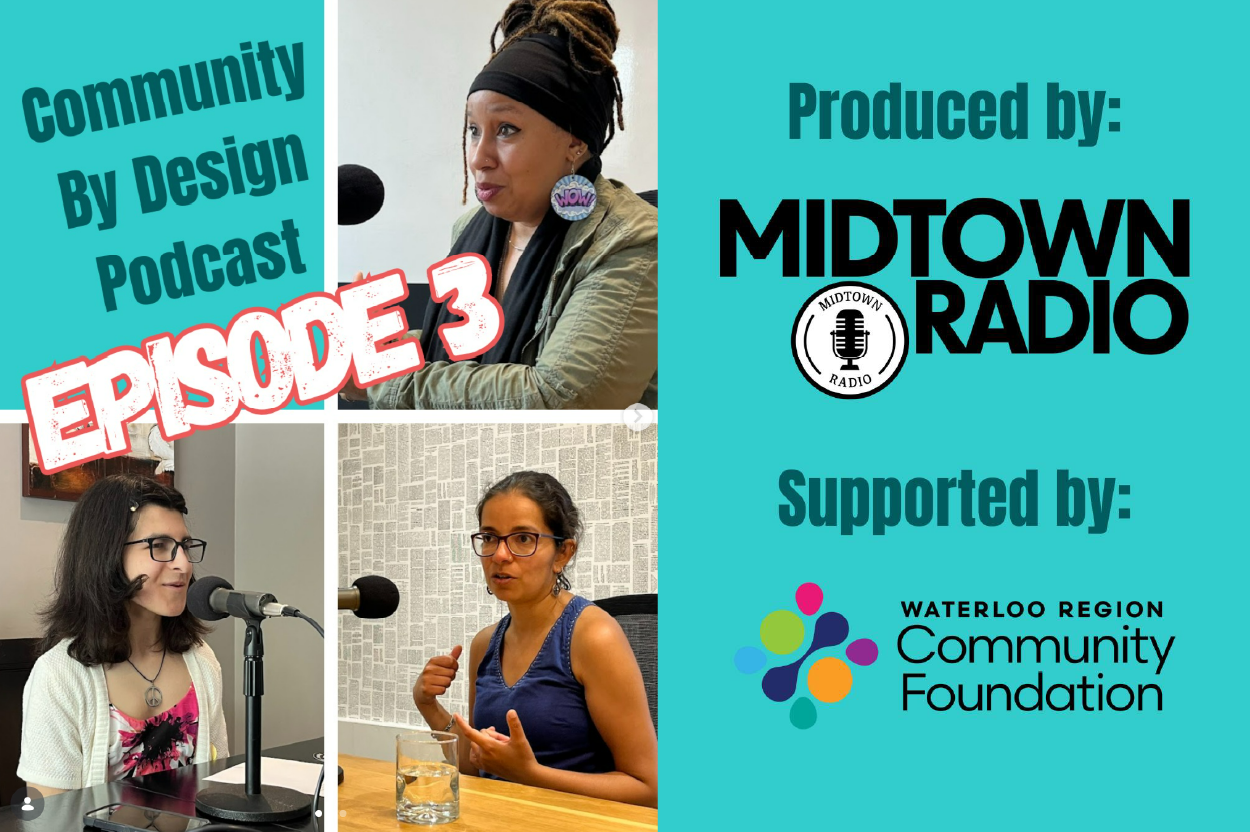
Laura Mae Lindo, Assistant Professor of Philosophy and Director of Black Studies at the University of Waterloo
Quinn Palmer, Student leader in the GSA at Waterloo Collegiate Institute
Taarini Chopra, Parent at King Edward Public School