On a snowy January 22 evening, we gathered with more than 120 people at Kitchener Public Library to kick off Community by Design, a new five‑part podcast created by Midtown Radio. The series draws inspiration from WRCF’s 2025 Vital Signs® Report and takes a closer look at the shared spaces, experiences, and systems that shape how we connect with one another across Waterloo Region.
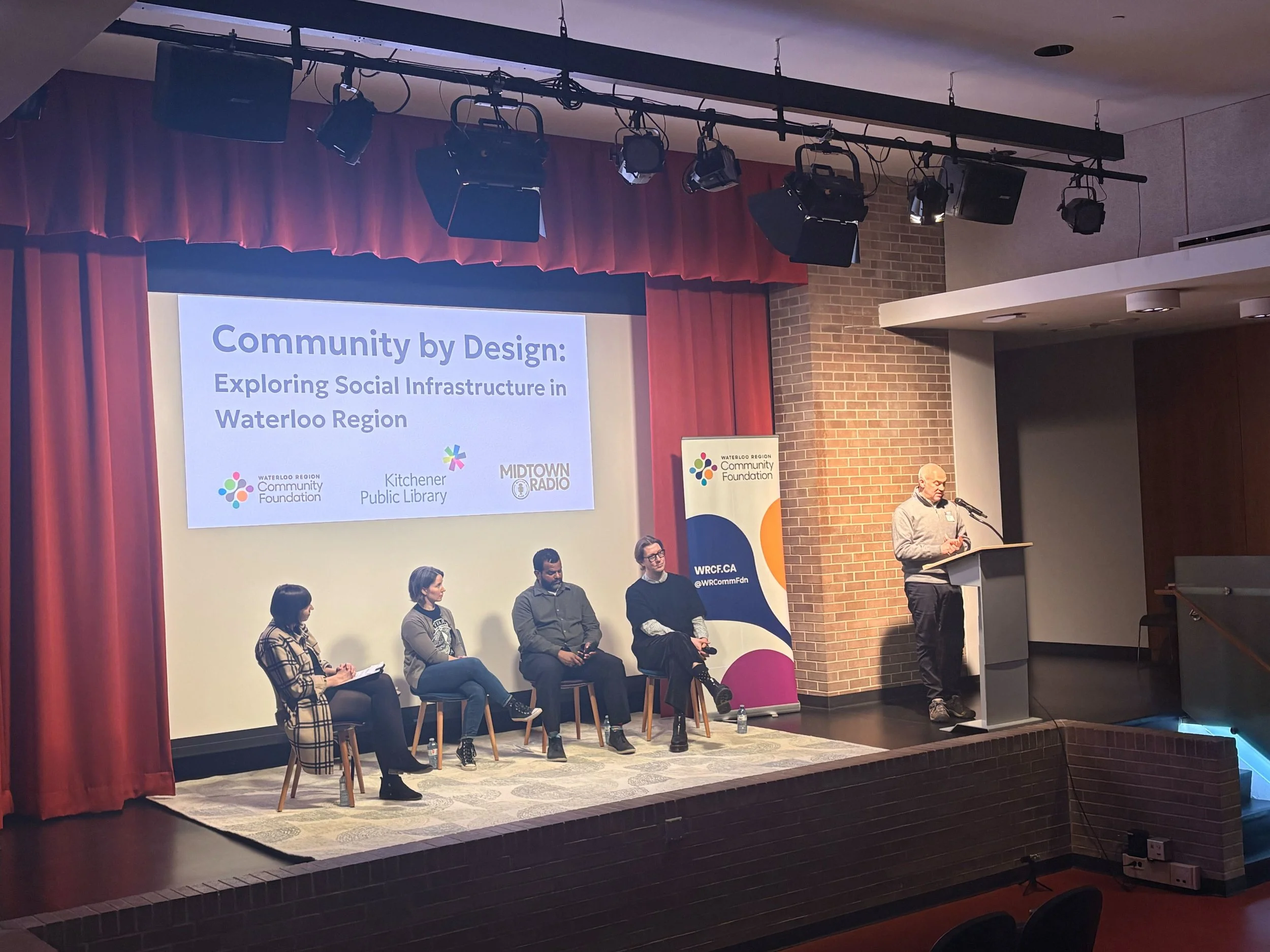
The evening’s main event was a panel discussion moderated by Danielle Deveau of Midtown Radio. Panellists Jeyas Balaskanthan (Uptown Waterloo BIA), Nathan Stretch (KPL), and Jay Harrison (the podcast’s host) reflected on how social infrastructure shows up in everyday life. Together, they explored how libraries, main streets, public spaces, programs, and community-led initiatives can either make connection easier, or harder, depending on how they’re designed and supported.
But the conversation wasn’t limited to the stage. Around the room, six questions invited attendees to share their own reflections. The written, candid, and thoughtful responses painted a rich picture of what helps people feel welcome, what they want more of, and what still gets in the way. While the answers were wide-ranging, some clear themes emerged:
Welcoming = people + place. For a place to feel welcoming, warm greetings, smiles, and eye contact matter. So does natural light, plants, colour, rooms that don’t feel sterile, and seeing a mix of ages, identities, abilities, and languages already in the space.
Intergenerational “third places” are in high demand. People want more places to gather that aren’t work or home. Intergenerational spaces (adults, kids, seniors) with adult‑friendly programming (art, trivia, games) and creative/music opportunities like jam rooms. And supports that make connection easier, like free childcare, are always welcome.
Everyday spaces already fuel connection. Libraries, cafés, markets, breweries, parks, trails, neighbourhood events, and clubs all anchor community life. Even so, people are looking for more affordable and reservable gathering spaces (including kitchens).
Barriers to using spaces are both practical and systemic. People described real-life blockers: limited time and energy, transportation challenges (including unplowed sidewalks), costs, restricted hours, digital requirements, racism, colonial systems, and environments with too many rules that signal who belongs and who doesn’t.
Information is scattered, so people use whatever channels they can find. Social media, newsletters, posters, word of mouth, and traditional media all play a role. Attendees shared that they often piece together what’s happening from multiple sources, depending on where they already spend time.
My biggest takeaway from the evening? Connection isn’t automatic. It doesn’t just happen. It’s something we intentionally design, invest in, and continually nurture. It’s powered by supporting our community connectors, social fabric weavers, and bridge builders. It’s revealed through welcoming norms, accessible systems, and shared spaces where people can show up, participate, and feel a genuine sense of belonging.
I hope these insights sparked an idea. Maybe even a nudge. I hope you’ll take one small step this month to connect. Visit your local library, join a neighbourhood event, reach out to someone new, or share the Community by Design podcast with a friend. Connection grows when we choose it. And together, we can choose to keep building a Waterloo Region where everyone feels at home.
🎧 Listen and subscribe: https://communitybydesign.transistor.fm/

Eric Avner
WRCF President & CEO
eric@wrcf.ca