
When the Rituals Disappear
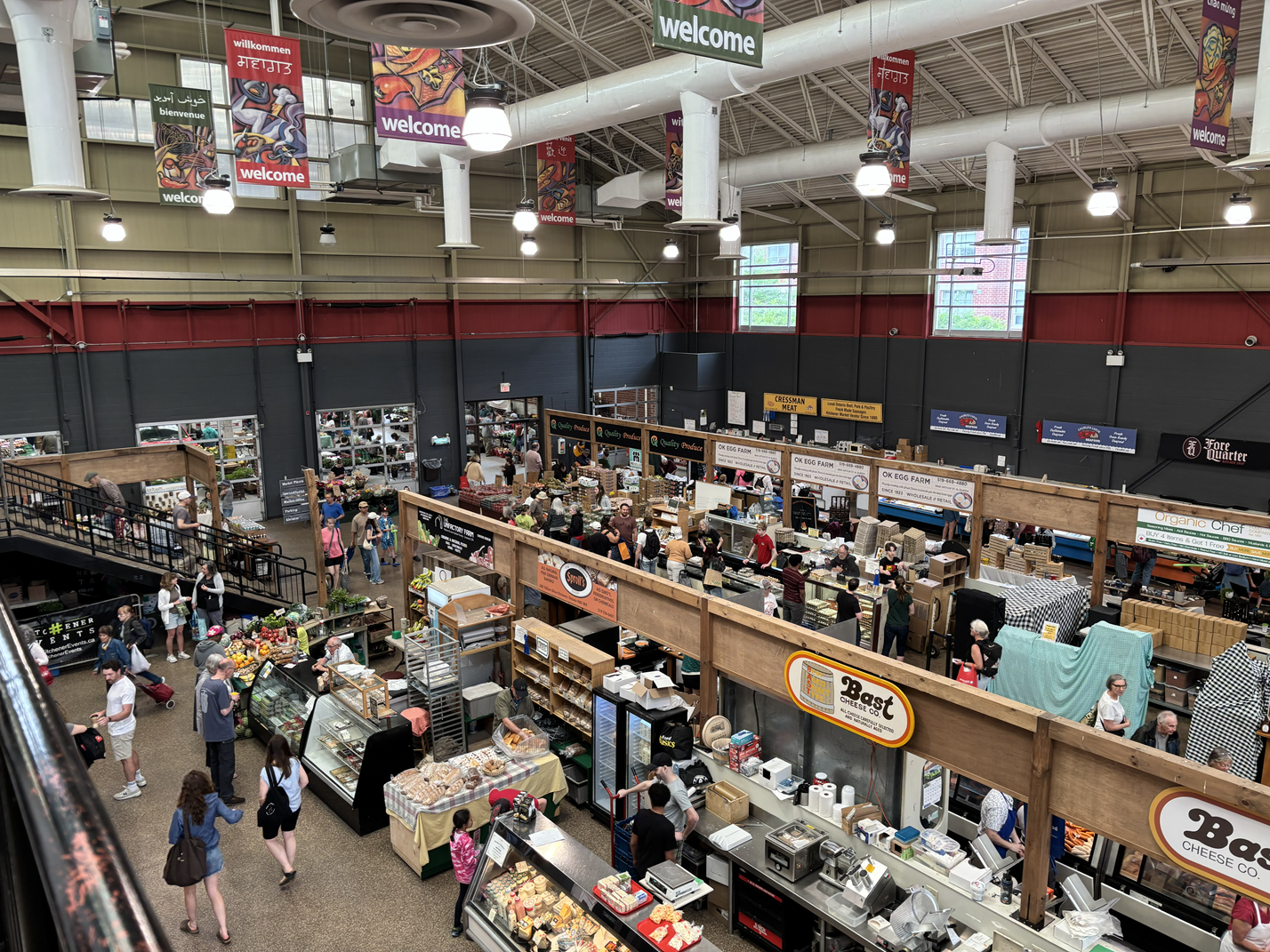
During the building closure, the Kitchener Market continues to host an outdoor market on Saturdays.
For thousands of people in Waterloo Region, Saturday mornings have a shape to them. A walk or ride or drive downtown to the Kitchener Market. The noise and energy of the place before you find your bearings. A familiar vendor, a neighbour spotted across the aisle, a brief exchange that amounted to very little but meant quite a lot.
That ritual is on hold. The Kitchener Market building, closed following a fire, will remain shut for several months. Much of the coverage has rightly focused on the financial impact to vendors. But it's important to also recognize that we’ve lost, if even temporarily, another vital thread in our community's social fabric.
At Waterloo Region Community Foundation, we recently released a Vital Ideas report on the relationship between places and social connection. One of its central insights is deceptively simple: spaces become places through repetition.
People don't build community in a single visit. They build it by returning. By recognizing a face, then learning a name. By the slow accumulation of small moments that, over time, create the sense that you belong somewhere. The Kitchener Market has been doing this for more than 150 years, drawing together people who wouldn't otherwise cross paths. Newcomers and lifelong residents, students and families, people from all backgrounds come for the produce and products and stay for something harder to name. As the Market's manager Cameron Dale puts it, the goal is for connection to feel like it's just part of your process of being there.
That is the genius of a well-functioning ritual. It doesn't announce itself as community-building. It just feels like Saturday morning. Coming to the Market is more than a weekly shopping routine. You move through a crowd. You buy from a person, not a shelf. You seek advice, overhear it being given to someone else, and sometimes join the conversation. It is, by its nature, participatory in a way a grocery store simply is not.
The Market's building closure does not stand alone. The displacement of Mike Farwell's midmorning show on 570 NewsRadio was another such loss this summer (I shared some thoughts on that here). For many residents, tuning in on a weekday morning was its own kind of rhythm. Like the Market on a Saturday morning, it was a place people returned to at a consistent time, finding a cast of neighbours they'd come to recognize. It was a shared gathering, even if its only geography was the dial. Its absence leaves a quieter and more disconnected landscape.
These losses are easy to underestimate, because these rhythms are easy to take for granted. We notice them most when they're gone. This moment makes me wonder about the fragility of the routines and habits that hold our community together, and whether we are being intentional enough about protecting them. And whether we are deliberate enough about creating new ones.
Market shoppers will find other places to buy produce. Listeners will find other sources of news. But will those alternatives also offer a reason to linger, a familiar face to greet, a quiet sense of belonging? The functional need gets met. The connective one is harder to replace. Losing the habit of showing up together is easier than rebuilding it.
Fortunately, the Market continues to welcome visitors and shoppers each Saturday morning through their outdoor market experience. Farmers, makers, and food producers have set up outside while work progresses inside the Market building. If the Market was part of your Saturday, consider keeping it that way. And if it never was, this might be the moment to start.
Having moved to Waterloo Region only four years ago, I personally appreciate how much these routines and gathering places matter to someone still finding their footing in a new community. Adopting rituals has been one of the ways I've come to feel I belong here. My hope is that we continue to tend to the traditions that make this region distinctive, and that we find the creativity and will to build new ones. They matter more than we often acknowledge, and they are what make a place worth coming back to.

Eric Avner
WRCF President & CEO
eric@wrcf.ca