African Women’s Alliance program supports those in need as they transition their lives in Canada with help from WRCF Racial Equity Fund
For Dr. Fadhilah Balogun, adjusting to life in Waterloo Region upon her arrival two decades ago was not without challenge.
While navigating cultural differences, the Nigerian-born medical doctor was at that time dealing with postpartum depression.
She credited two friends and neighbours for helping her through it.
“They took me out. They showed me how to navigate, how to make use of my transferable skills,” Dr. Fadhilah said. “They got me started on this journey. And then I started exploring, I met more people, and I continued learning.”
Now, Dr. Fadhilah helps guide others through similar transitions as Executive Director of the African Women’s Alliance of Waterloo Region. Since 1995, the nonprofit has supported African women and families, celebrating cultural heritage and enhancing integration through educational and social initiatives.
One example of that extended outreach is the African Women’s Alliance of Waterloo Region's Advocate Yourself – Our Health in Our Hands program.
Starting at the ‘community level’
Dr. Fadhilah said the project's launch was in response to feedback from an influx of newcomers who were struggling with isolation upon arriving here from Africa during the COVID-19 pandemic. Additional stresses tied to more recent global strife, such as U.S.-Canada trade relations, meant the timing was right to “help the community move forward in terms of taking care of the health needs at the community level.”
Said Dr. Fadhilah: “Let's equip the community. Let's equip the women with some tools, at least to take care of some very immediate needs.”
The African Women’s Alliance of Waterloo Region applied for funding through Waterloo Region Community Foundation (WRCF)’s Racial Equity Fund, which in addition to supporting initiatives focused on improving social infrastructure in Waterloo Region, is dedicated to supporting meaningful, positive action that advances the work of organizations that are led by and serving people in Waterloo Region who are Indigenous, Black, and people of colour. The organization was subsequently funded through two funds – the Spinnaker Fund and the Motz Family Endowment.
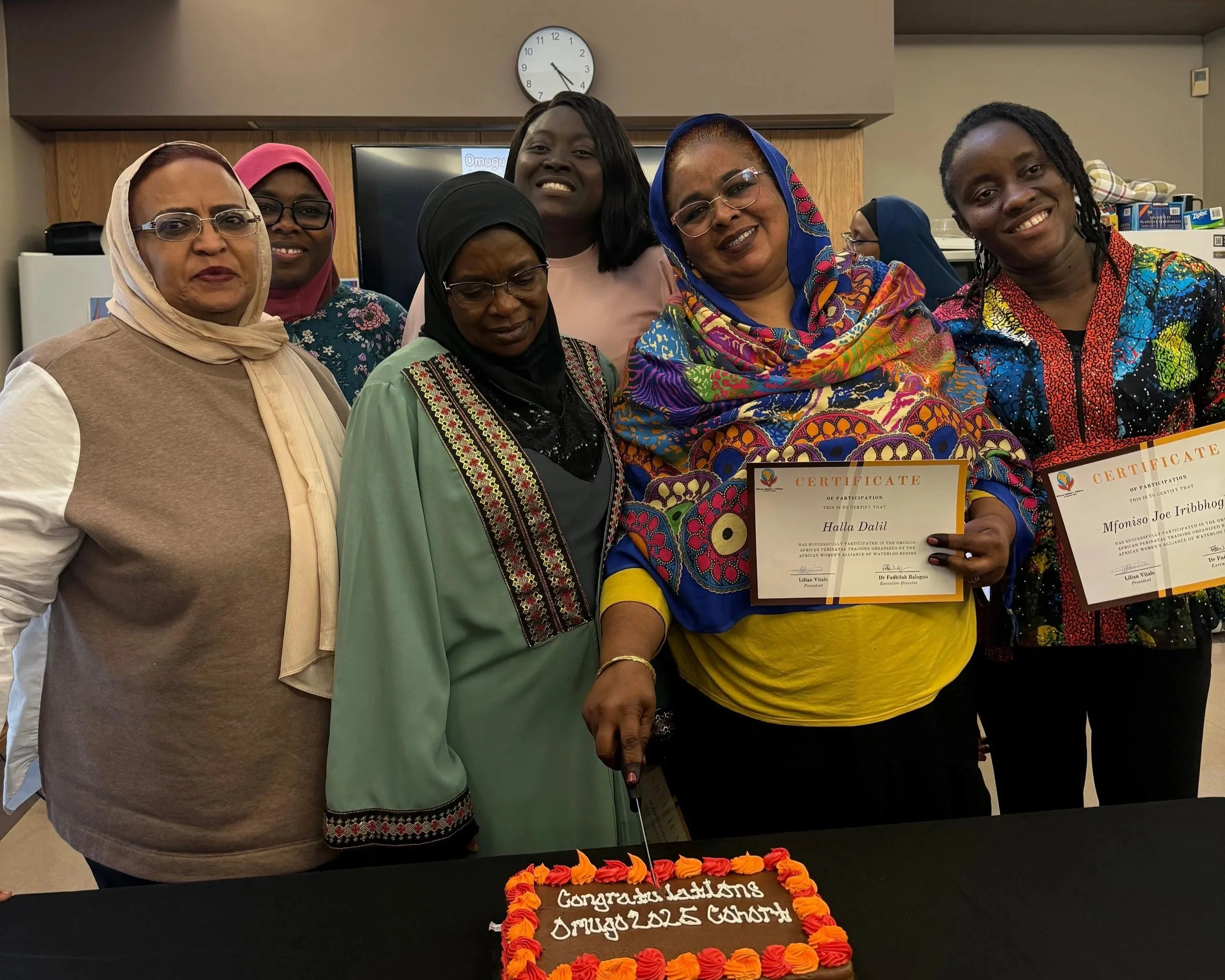
Over 12 months in 2025, participants gathered weekly to receive training on key topics, including financial literacy, cultural competency, gender-based violence awareness, and perinatal health support.
“Financially, many of them are coming from cash-based countries, into almost the cashless economy,” Dr. Fadhilah said. “Based on our own lived experiences ... we knew that financial literacy was one of the things that we had to tackle."
The topic of gender-based violence was discussed through the lens of creating understanding and awareness about cultural differences and religious teachings.
“What society accepted, or still accepts in some countries, isn’t accepted here,” Dr. Fadhilah said, adding that while not every newcomer has been impacted by physical abuse, “even the migration itself is traumatic. It’s a form of trauma that needs to be processed through.”
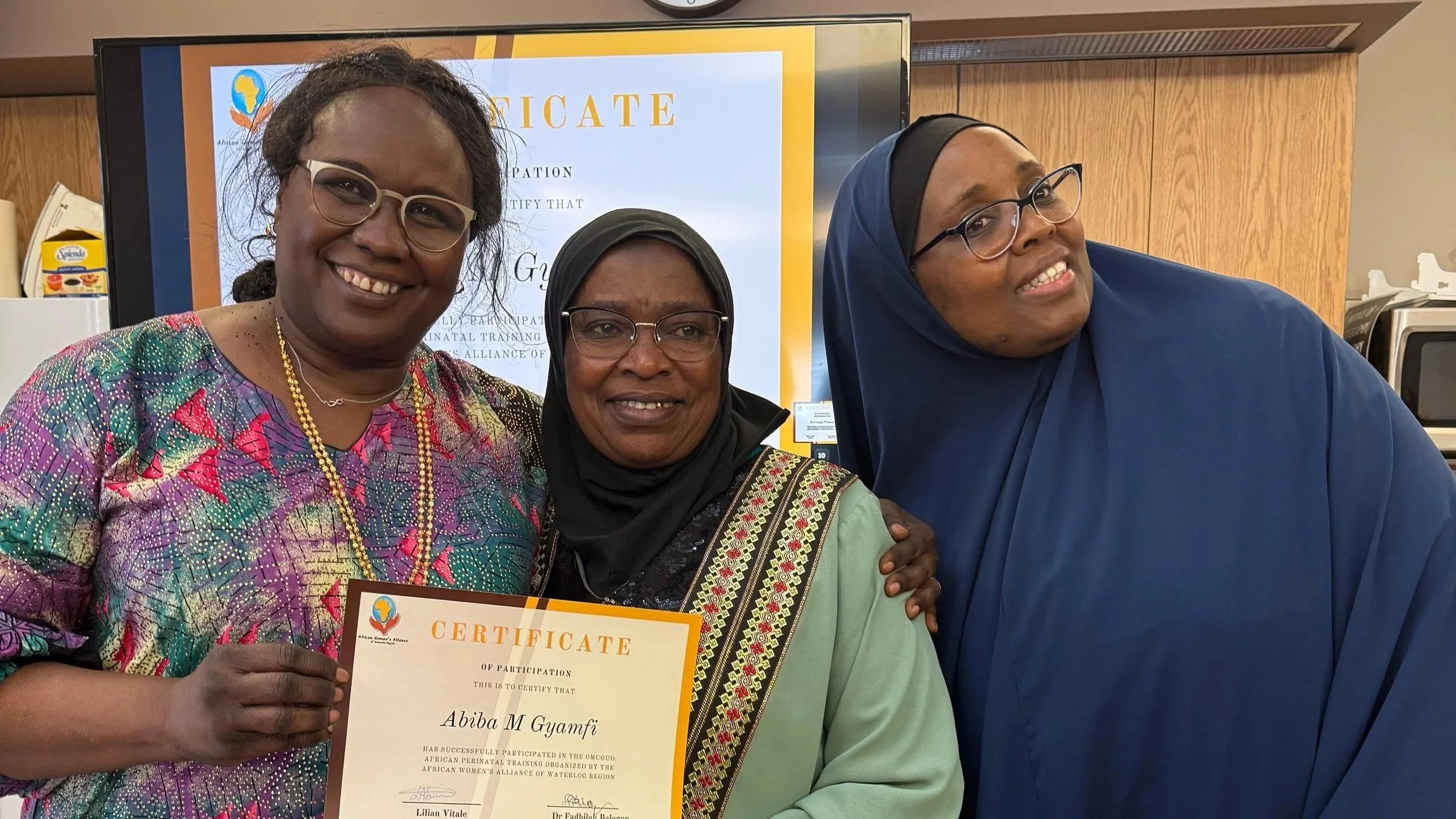
The program included guest speakers and trained leaders. Some participants also worked toward specialized training to receive a Nigerian Omugwo perinatal and caregiving doula certification.
"This is how the care is being done in Canada. Let us leverage that vast experience of our African women,” said Dr. Fadhilah, who is also a trained doula.
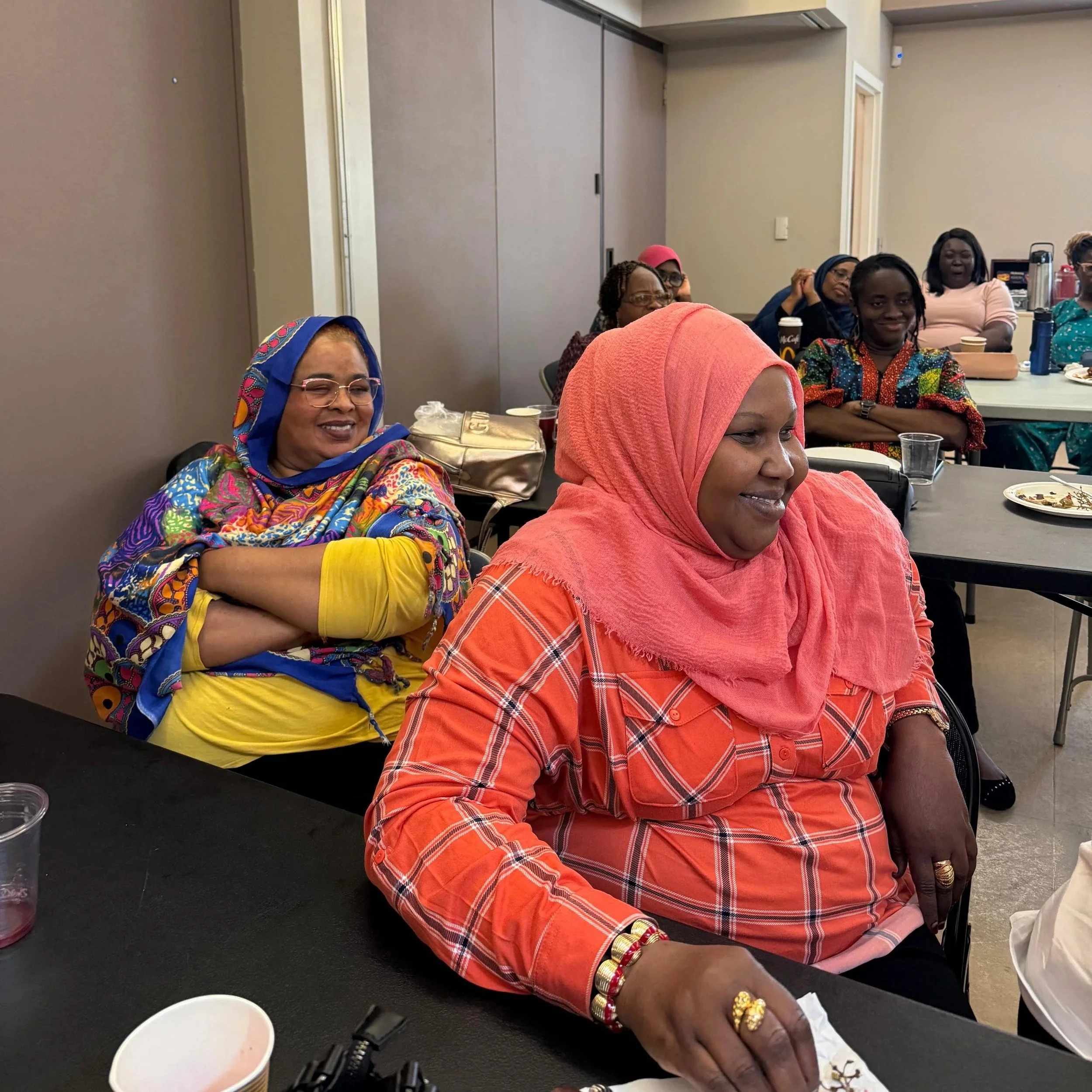
“Participating in the 2025 Omugwo Training was one of the most meaningful experiences I’ve had in preparing for my younger sister’s labor. Becoming an aunty for the first time (and in Canada) filled both of us with excitement and anticipation. Our search for knowledge and support led us to AWA’s Omugwo program, and it turned out to be exactly what we needed”
The project’s core model was peer support, where participants could engage in mutual learning through shared experiences and be trained to become community change agents.
“We were able to host that weekly session comfortably, ensuring that the women came and they experienced the Canadian courtesy of that morning coffee with a bite to eat,” Dr. Fadhilah said. “Because breaking bread also breaks down barriers and allows people to feel comfortable with each other. It helped us create that safe and relaxed environment for the women to return week after week to come and continue the learning and sharing with their other sisters, as they call themselves.”
Funding support appreciated
The program was a reality thanks to the funding, which helped cover costs associated with meals, staffing, transportation, and guest speakers.
“The model they use, which is the trust model, is really a big encouragement to community-led organizations like ours,” Dr. Fadhilah said of WRCF. “I tell people; they are an example of how funders should work with organizations. It’s really about the change and the impact of the work between the community. They were true supporters, and I'm very grateful to them. Without them and other generous funders in our region, I wouldn't have even been encouraged to continue ... maybe I would have just given up.”
The Executive Director spoke of two participants who gained employment upon completing their doula training, and of a newcomer grandmother who graduated from the program and felt “companionship” and “welcomed by the community” along the way.
From a sense of community and a shared sense of purpose comes opportunity. As was the case for Dr. Fadhilah in her Canadian journey.
“I see myself repeated over and over, my own stories repeated over and over, but in a more supported way,” she said. “Because when I came, I had support, but not enough, not this much.”
She added: “This is why the organization was created. To know that we need to be there for one another to be able to create a safer and a better future for the community. To improve lives, to create opportunity, and to impact the lives of the women and their families at the community level. Knowing that every good multiplies as it passes from one end to the other.”
To learn more about the African Women’s Alliance of Waterloo Region, go to afrowomen.ca.
For more information on WRCF’s Racial Equity Fund, visit wrcf.ca/racialequity. If you are interested in learning more about social infrastructure, visit wrcf.ca/socialinfrastructure.